UCHI Series – Intro to “Amorous Visions: Fluid Sexual Moments in Italian Cinema”

–>

Dear Earthlings:
As promised, the intro to my UCHI project presented on September 12, 2012.  Check it out an watch the three beautiful clips, with a finale of a “bisexual kiss.”  
I’ll stay tuned for your comments.
Introduction
Amorous Visions: Fluid Sexual Moments in Italian Cinema
Serena Anderlini-D’Onofrio, PhD

Anna and Giulia in Bertolucci’s The Conformist, 1970
Intent
Providing evidence for the argument that “sexual fluidity” and “amorous inclusiveness” are natural elements in the human expression of love.
Using Italian cinema as an art form that bears witness to that truth.
Abstract
This study articulates a new interpretation of pivotal scenes in selected classics of Italian cinema based on the cultural constructs of “amorous inclusiveness” and “sexual fluidity” elaborated in recent cultural analyses of human sexual, erotic, and amorous behavior (Ryan and Jetha 2010, Diamond 2009). These classics include Pasolini’s Teorema(1968), where a mysterious guest awakens the erotic libido of all members in a nuclear family, and Bertolucci’s The Conformist (1970), where a charming hostess similarly awakens both members of a newlywed couple. Based on these new interpretive paradigms, these scenes acquire a new meaning that discloses the bisexual and polyamorous content therein. This enables more positive and complete understandings of the films as projects that artistically express love for love, or erotophilia. As an experienced scholar who charted new research fields that study love as the art of crossing beyond sexual divides and exclusivity (BiTopia, 2011), I am uniquely prepared to articulate these interpretations.
Research and Contribution 
Based on Deleuze’s postmodern philosophy of cinema (1986), a film scene is a “movement-image” that stills time for future generations of viewers and can inspire transforming practices and movements. In many classics of Italian film, these scenes reflect pre-modern belief systems that precede monogamy and hetero/homo-normativities. As the expression of a 20th century cinematic culture and tradition, Italian film encodes many of the contrasting beliefs that have historically characterized the multiple cultures that have inhabited the peninsula. For example, the notion that love is an art and desire is fluid was common in antiquity, when the modern concept of sexuality did not exist. This situation provides a fertile context for the study of a film’s diegetic structure that pivots on scenes where the socio-sexual conventions of monogamy and monosexuality are momentarily suspended. Are these cinematic moments “bisexual”? Are they “polyamorous”? In this cinematic culture a director is considered the “author” (or auteur) of a film. What do the scenes reveal about this author? Is the director’s gaze coded in them? Why do the films appear so “queer” even though they are not part of an LGBTQ film tradition? To what extent do new generations of viewers get to redefine what these moments mean? 
 Interpretive Perspective
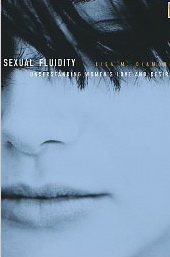
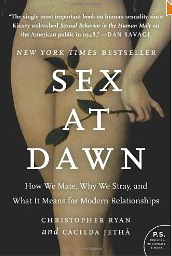
The interpretive perspective I propose is authorized by numerous recent studies of human sexual fluidity and amorous inclusiveness that converge in assessing its biological and cultural roots. Lisa Diamond’s longitudinal study of women’s sexual desire proves that sexual orientation exists alongside with variable degrees of sexual fluidity (2009). Matthew Ripley (et al.)’s study of bisexual men registers an increasing degree of comfort with this practice and identity at least in the secular world. Based on recent findings in Clinical Psychology at Northwestern University and from the Human Rights Commission, bisexual behavior turns out to be natural and healthy for a large number of humans (Rosenthal, LGBT Advisory Committee, 2011). Christopher Ryan and Cacilda Jetha’s study of the prehistoric origins of human sexuality proves that inclusive behavior in both sexual and parental love has been prevalent in human cultures and communities over the course of the prehistoric life of our species (2010). Monogamy is a social construct that becomes normative with history. Our species is not biologically programmed for it, which explains why so many people have trouble adjusting to it. 
Revisiting the “Fluid,” “Inclusive” Scenes
 
If sexual fluidity and amorous inclusiveness are “natural” for humans, then it is a good idea to look again at classics of Italian cinema for scenes of “sexual fluidity” and “amorous inclusiveness.” What do these scenes mean? Why are they significant? What new visions do they authorize if interpreted as cinematic moments that establish an early legitimacy for behaviors subsequently found to be natural for our species? Why do we still so often perceive these behaviors as “queer”? Can our vision of what is natural transform to include these behaviors too? How does the authority of new science about sexual fluidity and amorous inclusiveness in humans legitimate these new visions? These are questions in my mind as I plan to revisit the erotic awakening of Francesca and Silvana in Riso amaro (1948); the one the guest bestows on the frigid nuclear family members of Pasolini’s Teorema(1968).  The charming French hostess, in Bertolucci’s The Conformist(1970) similarly awakens the newlywed Italian couple writhing with erotophobia from the Fascist regime; and a number of other similar scenes.  
Silvana and Francesca bond as confidantes in Riso Amaro
  
Anna and Giulia dance together in The Conformist
As the new paradigms of “sexual fluidity” and “amorous inclusiveness” are put to work toward interpretations of classics of Italian cinema whose world fame exceeds their original cultural location, these interpretations will bring up unsuspected continuities. Binaries around which human sexual, erotic, and amorous behaviors have been organized include homosexuality and heterosexuality, monogamy and polyamory, modernity and antiquity. The cultural polarizations these binaries produce are in the way of envisaging worlds beyond these binaries. Directors whose key scenes represent “fluid” and “inclusive” moments produce visions of worlds possible beyond these binaries, were love for love, or erotophilia, prevails over erotophobia, or fear of love.  A recent example of this is the fluid, inclusive kiss scene in Ferzan Ozpetek The Ignorant Fairies (2001). 
Antonia and Michele exchange a “bisexual kiss” in The Ignorant Fairies 
 The Million Dollar Question:
How can we create a world where Massimo, the shared lover who binds Michele and Antonia erotically, wouldn’t have to be dead for Michele and Antonia to kiss?
How can humanities-based interdisciplinary research help to make this happen?
Thank you!
Work Cited List
Primary Sources
Bertolucci, Bernardo.  Il conformista/The Conformist.  Rome: Green Film, 1970.
De Santis, Giuseppe.  Riso amaro/Bitter Rice.  Rome: Lux, 1948.
Ozpetek, Ferzan.  Le fate ignoranti/His Secret Life.  Rome: Medusa, 2001.
Pasolini, Pier Paolo.  Teorema.  Rome: Aetos Film, 1968.
Secondary Sources
Anderlini-D’Onofrio, Serena.  “Bisexual Games and Emotional Sustainability in Ferzan Ozpetek’s Queer Films.”  New Cinemas: Journal of Contemporary Film: 2: 3 (2004): 163-174.
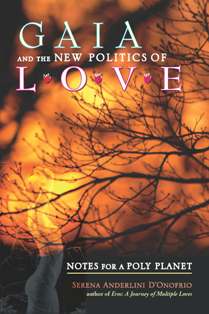
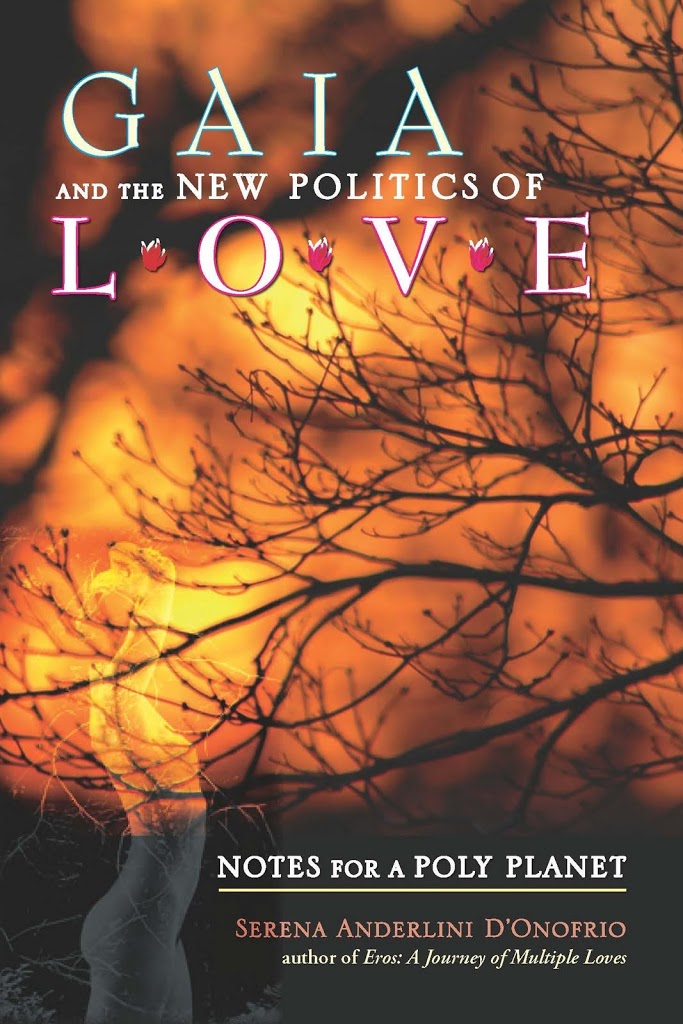
Anderlini-D’Onofrio, Serena.  Gaia and the New Politics of Love: Notes for a Poly Planet.  Berkeley: North Atlantic Books, 2009.
______  ed.  BiTopia: Selected Proceedings from BiReCon 2010.  Routledge, 2011.
Deleuze, Gilles. Cinema 1: The Movement-Image.  Tomlinson, Hugh, tr.  Minneapolis: University of Minnesota Press, 1986.
______  .  Cinema 2: The Time-Image.  Tomlinson, Hugh, tr.  Minneapolis: University of Minnesota press, 1989.

LGBT Advisory Committee.  Bisexual Invisibility: Impacts and Recommendations.  San Francisco: Human Rights Commission, 2011. 
Ripley, Matthew, Adrian Adams, Robin Pitts, Eric Anderson.  The Decreasing Significance of Stigma in the Lives of Bisexual Men: Keynote Address.”  In BiTopia: Selected Proceedings from BiReCon.  New York: Routledge, 2011.
Ryan, Christopher and Cacilda Jetha.  Sex at Dawn: The Prehistoric Origins of Modern Sexuality.  New York: Harper, 2010.  Kindle Edition.
Dear Earthlings,

Courtesy of Poliamore Italia

Remember to come back on Thursdays for more snippets of what yours truly is up to.  

Want to know more about yours truly’s new book? What Is Love dares to engage the million dollar question!  Would like to pre-read?  Find out how to endorse the book here.
Education is the heart of democracy, education to love.  Come back for more wonders.   

Namaste,

Serena Anderlini-D’Onofrio, PhD

Author of Gaia, Eros, and many other books about love
Fellow at UCHI
Professor of Humanities 
University of Puerto Rico, Mayaguez
Join Our Mailing List

Follow us in the social media
Poly Planet GAIA Blog: 
http://polyplanet.blogspot.com/ 
Be Appraised of Ecosex Community Project PostaHouse 
Become a Fan: www.facebook.com/GaiaBlessings 
Author’s Page/Lists all books: 
YouTube Uploaded Videos: http://www.youtube.com/SerenaAnderlini
 

Find us on FacebookFollow us on TwitterView our profile on LinkedInView our videos on YouTubeVisit our blog

PostaHouse: Apennine Eco Community
http://polyplanet.blogspot.com

18 of 26 – De l’Absurdite des vers – Mohamed Nait Youssef

Dear Earthlings:
My gift this year is a collection of 26 poems in my favorite language, French.  It’s the language of love, so full of charm and mystery and music.  Those earth tones, warm vowels that feel like deep ocher.  It produces oxytocin, at least for me.  The author, Mohamed Nait Youssef, is a promising voice.  Very touching, heartfelt his journey into awareness of nature and being.  Here is the 18th in the series.  We’ll come back every Friday.


–>

18. Amour :
Je te cherche dans tous les endroits
Beau,
Mari de la joie
Doux,
Et ami de toutes les bonnes fois
Tu es cette vie en moi
Libre,
Tu échappes à toutes lois
De temps en temps, prince, dieu ou roi
L’âme,
va t’accepter sans choix
Amour,
Sois ennemis des mauvaises fois
Parce qu’il y a une seul loi
Le chaos ou bien toi…

Published here with permission.  Reach the author:
Mohamed NAIT YOUSSEF né en 1988 à Tripoli Libye. Étudiant de la littérature française à la faculté poly-disciplinaire d’Errachidia. Jeune issu du Sud-est du Maroc -village qui s’appelait, Gourrama, dans province de Midelt.
+212615156476
Dear Earthlings,
Courtesy of Poliamore Italia

Remember to come back every Monday for another poem by Mohamed. And tell all your French-speaking friends to show up to.  “Like” our blog and keep us in mind when you have something interesting.  Meanwhile, watch for snippets from Serena’s new book, What Is Love?  She dares to answer the million dollar question in this one.  Would like to pre-read?  Find out how to endorse her book here.

Education is the heart of democracy, education to love.  Come back for more wonders.  And check out out vacation offerings.  
Namaste,
 
Serena Anderlini-D’Onofrio, PhD
Gilf Gaia Extraordinaire
Author of Gaia, Eros, and many other books about love
Professor of Humanities
University of Puerto Rico, Mayaguez
Join Our Mailing List
   
Follow us in the social media
Poly Planet GAIA Blog: 
http://polyplanet.blogspot.com/ 

Be Appraised of Ecosex Community Project PostaHouse 
Become a Fan: www.facebook.com/GaiaBlessings 
Author’s Page/Lists all books: 
YouTube Uploaded Videos: http://www.youtube.com/SerenaAnderlini
 

Find us on FacebookFollow us on TwitterView our profile on LinkedInView our videos on YouTubeVisit our blog

http://polyplanet.blogspot.com

UCHI Series – Fellini’s Orgiastic Imagination, in Video

Dear Earthlings,

Did you get to read my notes and watch the clips about Fellini’s cinema?  They appeared last week. Now you can take a shortcut and simply watch this video of my presentation to the Fellows group.

I can’t go into as much details as i would like to.  But it’s a good scoop.  If you’d like more details, go back to the posting of November 5th, 2012.  You’ll find out all about I Vitelloni, a 1953 film whose title refers to the overgrown milk-fed calves whose meat Italians like to eat.  With this film, the term became synonym of young men who don’t take life too seriously and sponge a bit on society, families, women.  There’s something charming about them, as they live in the moment and are open, flirtations, and cute. 

It’s great to share some of what I’m doing here at U Conn Storrs in my Fellowship year.  

Stay tuned for more posting on Mondays in this series.  We will go back in time to the beginning of the Fellowship period, when i introduced the project to the group.

Oh, I almost forgot this:

Want to know more about yours truly’s new book? What Is Love dares to engage the million dollar question!  Would like to pre-read?  Find out how to endorse the book here.

Education is the heart of democracy, education to love.  

Come back for more wonders.   

Namaste,
 

Serena Anderlini-D’Onofrio, PhD

Author of Gaia, Eros, and many other books about love
Fellow at UCHI
Professor of Humanities 
University of Puerto Rico, Mayaguez
Join Our Mailing List

Follow us in the social media
Poly Planet GAIA Blog: 
http://polyplanet.blogspot.com/ 
Be Appraised of Ecosex Community Project PostaHouse 
Become a Fan: www.facebook.com/GaiaBlessings 
Author’s Page/Lists all books: 
YouTube Uploaded Videos: http://www.youtube.com/SerenaAnderlini
 

Find us on FacebookFollow us on TwitterView our profile on LinkedInView our videos on YouTubeVisit our blog

PostaHouse: Apennine Eco Community

http://polyplanet.blogspot.com

17 of 26 – De l’Absurdite des vers – Mohamed Nait Youssef

Dear Earthlings:
My gift this year is a collection of 26 poems in my favorite language, French.  It’s the language of love, so full of charm and mystery and music.  Those earth tones, warm vowels that feel like deep ocher.  It produces oxytocin, at least for me.  The author, Mohamed Nait Youssef, is a promising voice.  Very touching, heartfelt his journey into awareness of nature and being.  Here is the 17th in the series.  We’ll come back every Friday.


–>

17. Ne pleure pas…ma  grand-mère :
Je sais que la vie est amère
T’as tout perdu
Tes sœurs, amis  et frères
Je sais que l’amour n’existe que guère
L’homme ne sait qu’un seul devoir :
Celui de la guerre
Ne pleure pas…..ma grand-mère
Tes devinettes  ont quitté la terre
Nos poèmes et poêles 
Ont navigué dans le même navire
Ne pleure pas…..ma grand-mère
Tes larmes soupirent  la mer
Le monde respire
Un étouffant air
Je sais que l’argent, l’apparence et le paraitre
Dans le poème de l’esclavage,
Des mots  dans un seul vers
Ne pleure pas…..ma grand-mère
Je sais que la vie est amère
T’as tout perdu
Tes sœurs, amis  et frères
Je sais que l’amour n’existe que guère
Ne pleure pas…..ma grand-mère
Malgré cette logique autoritaire
De haïr, haïr, et haïr…
Ton poème fleurira dans tous les jardins et les déserts…
Published here with permission.  Reach the author:
Mohamed NAIT YOUSSEF né en 1988 à Tripoli Libye. Étudiant de la littérature française à la faculté poly-disciplinaire d’Errachidia. Jeune issu du Sud-est du Maroc -village qui s’appelait, Gourrama, dans province de Midelt.
+212615156476
Dear Earthlings,
Courtesy of Poliamore Italia

Remember to come back every Monday for another poem by Mohamed. And tell all your French-speaking friends to show up to.  “Like” our blog and keep us in mind when you have something interesting.  Meanwhile, watch for snippets from Serena’s new book, What Is Love?  She dares to answer the million dollar question in this one.  Would like to pre-read?  Find out how to endorse her book here.

Education is the heart of democracy, education to love.  Come back for more wonders.  And check out out vacation offerings.  
Namaste,
 
Serena Anderlini-D’Onofrio, PhD
Gilf Gaia Extraordinaire
Author of Gaia, Eros, and many other books about love
Professor of Humanities
University of Puerto Rico, Mayaguez
Join Our Mailing List
   
Follow us in the social media
Poly Planet GAIA Blog: 
http://polyplanet.blogspot.com/ 

Be Appraised of Ecosex Community Project PostaHouse 
Become a Fan: www.facebook.com/GaiaBlessings 
Author’s Page/Lists all books: 
YouTube Uploaded Videos: http://www.youtube.com/SerenaAnderlini
 

Find us on FacebookFollow us on TwitterView our profile on LinkedInView our videos on YouTubeVisit our blog

http://polyplanet.blogspot.com

UCHI Series – Fellini’s Orgiastic Imagination? A Dream of Return to Mother, Hostess, Lover, Liquid Matrix of Life

Dear Earthlings,
I have been out of touch for a while.  You may have missed me.  Please forgive.  The move to U Conn, Storrs, was no joke and took most of my focus.  Now, Sandy has passed too, and if that does not help generate awareness of Gaia Theory I don’t know what will!  
U Coon Storrs is very congenial.  A university expanding in multiple directions across disciplines: environment, sustainability, the digital sphere, education, health, language an culture.  Woooow!  How inspiring.  I feel very happy to be in the midst of this.  The Fellowship group is also beautiful.  I love the communion of the minds in our discussions.  Namaste!
So, I’m back with a desire to share what I’ve been doing.  Here’s my latest to the Fellows group.  It’s about the ur-director of Italian cinema, Fellini.  These are just in-progress notes.  Don’t take them too seriously.  Also, watch the two beautiful clips.  Let me know what you think. 
Fellini’s Orgiastic Imagination: A Dream of Return to Mother, Hostess, Lover, Liquid Matrix of Life
Serena Anderlini-D’Onofrio, PhD
UCHI Presentation, October 24, 2012
Context of Book Project Amorous Visions: Fluid Sexual Moments in Italian Cinema
Chapter on Assunta Spina, silent, 1914.
Diva, a chthonic force, a manifestation of the divine feminine, more than a French or British femme fatale or an American flapper.  Diva: means “goddess,” integrates pagan and Christian aspects of divine feminine:  pagan goddess and mater dolorosa.  The film is in the hands of the Diva, she calls the shots (Dalle Vacche, passim).  Film Assunta Spinais all about amorous inclusiveness and sexual fluidity:  Assunta loves unconditionally all three men in her life.  But they don’t understand this, each wants her exclusively, one disappears, and one ends up killing the other.  Assunta accuses herself of murder when the police arrive. 
Chapter on White Telephones genre, as in What Rascals Men Are, 1932.  It’s black and white sound cinema.  Genre: romantic comedy, comedy of manners: carefully avoids social and political issues, is designed to keep people entertained and oblivious to what’s around them.  Idealized world: telephones are white.  Also, corresponds to 1930s, a period of crisis in Italian based film production, because the “talkies’ come from America and people what to see that.
Chapter on Bitter Rice, 1948.  Neorealismo: new national identity post Fascism.  Film as epistemology rather than art, a way to “know” the Italy kept under wraps by Fascism.  Film is shot on location, non-professional actors, script often improvised, long panning shots, lots of context, local character, group protagonist, “macchiettismo,” humor mixed with drama (Marcus, passim).  Construction of a national identity involves a way to justify ownership of a territory, which becomes un-sovereign, feminized.  So this identity, this “ownership” has a masculine character, and is predicated on styles of love that are functional to reproduction, including of course, heterosexuality.  This is when what Eve Kosofsky-Sedgwick would call “writing of homosexual panic” begins.  “Sexual fluidity” and “amorous inclusiveness” are only visible in spurts, scenes that are pivotal to the plot but whose “love for love” energy gets quickly reined in and redirected toward love that’s functional of human reproduction.  Bitter Rice has focus on women’s lives in the rice harvest fields.  If you view the movie w/ “queer” binoculars, from the POV of an age when women can marry each other, you can see that Silvana and Francesca could have become lovers.  They attract and are attracted to the same guys.  They are coopted in a regime of sexual functionalism, Silvana becomes enraptured by Francesca’s prior life of robbery and glamour, and the only time their reciprocal love becomes expressed is when Francesca unsuccessfully tries to save Silvana from committing suicide. 
Chapter on Fellini’s I Vitelloni, 1953.  Film is part of Neorealismo in technique, style, structure, and also consolidates the practice of “cinema d’autore,” Italian version of auteur film. 
Meanings of title: the overgrown milk-fed calves, the big bowel or gut, lazy good-for-nothings (Stubbs, 95).  I Vitelloni brought success of public and criticism to Fellini, thus enabling funding of subsequent films (Baxter, 100-1). 
Cinema d’autore, or auteur film
Context: effort to establish film as an art form w/ its own specificity, aesthetics, epistemological function.
Film as Art: stills movement image across time.  As in “movement-image,” “time-image,” Deleuze.  Many inspired artists are attracted to it. 
Truffaut, French director who theorized auteur in Cahiers du Cinema, Jan 1959, p. 221: “Cinema cannot be an art as long as it is the result of the work of a group” (Wall, 23).
About Fellini: “On the filmmaker playing God” (Wall, 97).
Fellini makes fun of scriptwriter in 8 ½, of playwright in I Vitelloni, his casting is based on him seeing an actors’ face as a “sculpture” her can use to do what he likes (Baxter, 98-99).  He infuriates producers, goes over budget and ignores shooting timeline. 
But what is the “content” of this sovereign vision?
What is the desire that animates the artist?
I guess most would agree that it is a desire for inclusive beingness, not action. “Advanced” Fellini ever more eliminates plot, narrative.  He dwells in being-in-the-moment, the imaginary, dream, inclusive festive moments of idleness embraced by an ironic gaze that is benevolent and cherishing at the same time. 
 
Clip from I Vitelloni’s Carnival scene, Bakhtin, Carnival as reversal, polyphony, carnival, the grotesque, heteroglossia.
 
Clip from I Vitelloni’s scene of “homosexual panic,” as per a Sedgwick manual.  But what is this panic?  A fear of the wild side, of what it would take to turn “real” life into a circus, a carnival, an orgiastic space of orgasmic immersion into the pleasure of the other?
My contribution to the debate:
Fellini’s avowed “dreams” about water, seas, mothers.  Remember, in Romance languages these are acronyms: mer, mere; mare, madre; mar, madre.  No coincidence!  The mother is a liquid body to the child, first amniotic, then milk.  Water is the matrix of life.  Fellini avows that he loves to dream, that he makes films so people can watch his dreams, a version of them (Chandler, 209). 
Who are the five vitelloni?
Three of the five represent aspects of his personality – womaniser, homophile, intellectual – with Riccardo supplying the physical resemblance and Moraldo the professional” (Baxter, 98)
My point:  I like this idea that eachvitellone is an aspect of Fellini’s personality, the all-encompassing visionary of the all inclusive orgy of life.  In this context, Leopoldo, the deluded playwright, is a put down of theater, the traditional art of representation, in relation to the new one, cinema, that Moraldo, the observer Fellini, will supposedly embrace when he gets to Rome.
The all-encompassing visionary of the all inclusive orgy of life.”  As within, dream, so without, film.  Key is irony, Fellini, like Moraldo, observes the “orgy of life,” w/ distance both ironic and passionate.  And this vision, is nothing but a dream to return to the undifferentiated, the divine feminine mother, hostess, lover, liquid matrix of life. 
Reported recurring dream of Fellini’s:
“As a giant sea monster was lifted out of the water, I saw that it was actually a huge woman.  She was beautiful and ugly, at the same time. Which did not seem at all a contradiction to me.  Then, as now, I could not help but notice that she had huge thighs.  Even in relation to her gangantuan proportions, her thighs wee abnormally large” (Chandler, 206).
“I’m a child in a tube being bathed by women.  It’s an old-fashioned wooden tub, like the one that was outdoors at my grandmother’s farm, the kind we children used to mash the grapes for wine with our bare feet.  Before mashing the grapes, we had to wash our feet.  Afterwards you could still smell the residue of fermenting grapes when you took a bath in the tub.  It could almost make you feel drunk.
Sometimes I bathed with several children, little boys and girls, all of us naked.  The waster was deep, over my head, which was my definition of deep.  All of the other children could swim.  I was the one who couldn’t.  Once I nearly drowned.  I had to be pulled out by my hair.  Fortunately I had more then than I do now, or I would have drowned.
In my dream, as I get out of the tub, my naked, wet little body is wrapped in big towels by several women with huge breasts.  Women in my dreams never wear brassieres, nor do I think brassieres that large ever existed.  They wrap me in their towels.  They hold me against their breasts, rolling me back and forth to dry me.  The towel brushes against my little thing, which flips merrily from side to side.  It’s such a lovely feeling, I hope it never stops.  Sometimes the women fight over me, which I enjoy too. 
I’ve spent my life looking for the women of childhood who wrap you in towels” (Chandler, 208).
Works Cited
Bertini, Francesca and Gustavo Serena.  Assunta Spina.  Rome: Caesar Film, 1915.
De Santis, Giuseppe.  Riso amaro/Bitter Rice.  Rome: Lux, 1948.
Fellini, Federico.  I Vitelloni/The Young and the Passionate. Rome: Peg-Film, 1953.
Baxter, John.  Fellini.  New York: St. Martin’s Press, 1993. 
Chandler, Charlotte.  I, Fellini.  New York: Random House, 1995.
Dalle Vacche, Angela.  Diva: Defiance and Passion in Early Italian Cinema.  Austin: Texas University Press, 2008.
Kosofsky-Sedgwick, Eve.  “The Beast in the Closet: James and the Writing of Homosexual Panic.”  In Sex, Politics, and Science in the Nineteenth Century Novel (148-186).  Beinard Yeazell, Ruth ed.  Baltimore: Johns Hopkins University Press, 1986.
Marcus, Millicent.  “Introduction.”  Italian Film in the Light of Neorealism (1-29).  Princeton University Press, 1986. 
Stubbs, John C.  Federico Fellini as Auteur.  Carbondale. IL: Southern Illinois Press, 2006.
Wall, James McKendree.  The European Directors.  Grand Rapids, Michigan:  William Eerdmans Publishing, 1973.
 
Dear Earthlings,
Courtesy of Poliamore Italia

Remember to come back on Mondays for more snippets of what yours truly is up to.  

Want to know more about yours truly’s new book? What Is Love dares to engage the million dollar question!  Would like to pre-read?  Find out how to endorse the book here.
Education is the heart of democracy, education to love.  Come back for more wonders.   
Namaste,
Serena Anderlini-D’Onofrio, PhD

Author of Gaia, Eros, and many other books about love
Fellow at UCHI
Professor of Humanities 
University of Puerto Rico, Mayaguez
Join Our Mailing List

Follow us in the social media
Poly Planet GAIA Blog: 
http://polyplanet.blogspot.com/ 
Be Appraised of Ecosex Community Project PostaHouse 
Become a Fan: www.facebook.com/GaiaBlessings 
Author’s Page/Lists all books: 
YouTube Uploaded Videos: http://www.youtube.com/SerenaAnderlini
 

Find us on FacebookFollow us on TwitterView our profile on LinkedInView our videos on YouTubeVisit our blog

PostaHouse: Apennine Eco Community
http://polyplanet.blogspot.com

16 of 26 – De l’Absurdite des vers – Mohamed Nait Youssef

Dear Earthlings:
My gift this year is a collection of 26 poems in my favorite language, French.  It’s the language of love, so full of charm and mystery and music.  Those earth tones, warm vowels that feel like deep ocher.  It produces oxytocin, at least for me.  The author, Mohamed Nait Youssef, is a promising voice.  Very touching, heartfelt his journey into awareness of nature and being.  Here is the 16th in the series.  We’ll come back every Friday.
 

–>

–>

16. La prière du Satan :
Quand, le soir angoissé, obscur et malin
La pauvre femme demeure dans l’étouffant chagrin
Hélas !
Elle entend la voix de cet enfant faim
Mère, mère…je voudrais du pain
C’est un cri, sourd et monotone tous les matins
La femme a perdu les chemins
Ô corps soyeux, beau et timide !
Ira là-bas, loin, très lion…
Un  Satan, vient de chercher des proies sirènes
Ses chiens,
Ne savent que les odeurs des seins
Soudain,
L’innocent, vient, il approche lentement
Voici le livide parfum
Sans occasion, prisonnier dans le piège…enfin
Ils sont partis lointains
Sur le maudit lit,
La pauvre chair aura une belle fin
La prière commença, qu’importe? La bouche ou les mains,
Qu’importe, quand l’homme devient faquin
L’enfant,
Ô mère, j’ai faim !!!
 Ô Dieu, je voudrais du pain !!!
La chair soupir, han han han… 
Pendant que le chien mange le sein
Le lit répète l’unique refrain
Putain, putain, putain…
Qu’importe, la chair ou le pain ???
Published here with permission.  Reach the author:
Mohamed NAIT YOUSSEF né en 1988 à Tripoli Libye. Étudiant de la littérature française à la faculté poly-disciplinaire d’Errachidia. Jeune issu du Sud-est du Maroc -village qui s’appelait, Gourrama, dans province de Midelt.
+212615156476
Dear Earthlings,
Courtesy of Poliamore Italia

Remember to come back every Monday for another poem by Mohamed. And tell all your French-speaking friends to show up to.  “Like” our blog and keep us in mind when you have something interesting.  Meanwhile, watch for snippets from Serena’s new book, What Is Love?  She dares to answer the million dollar question in this one.  Would like to pre-read?  Find out how to endorse her book here.

Education is the heart of democracy, education to love.  Come back for more wonders.  And check out out vacation offerings.  
Namaste,
 
Serena Anderlini-D’Onofrio, PhD
Gilf Gaia Extraordinaire
Author of Gaia, Eros, and many other books about love
Professor of Humanities
University of Puerto Rico, Mayaguez
Join Our Mailing List
   
Follow us in the social media
Poly Planet GAIA Blog: 
http://polyplanet.blogspot.com/ 

Be Appraised of Ecosex Community Project PostaHouse 
Become a Fan: www.facebook.com/GaiaBlessings 
Author’s Page/Lists all books: 
YouTube Uploaded Videos: http://www.youtube.com/SerenaAnderlini
 

Find us on FacebookFollow us on TwitterView our profile on LinkedInView our videos on YouTubeVisit our blog

http://polyplanet.blogspot.com

15 of 26 – De l’Absurdite des vers – Mohamed Nait Youssef

Dear Earthlings:
My gift this year is a collection of 26 poems in my favorite language, French.  It’s the language of love, so full of charm and mystery and music.  Those earth tones, warm vowels that feel like deep ocher.  It produces oxytocin, at least for me.  The author, Mohamed Nait Youssef, is a promising voice.  Very touching, heartfelt his journey into awareness.  Here is the 15th in the series.  We’ll come back every Friday.
 

–>

15. Le cri d’une âme :
Il part…
Sans rêves, ni espoirs
Dans le monde de l’ombre
Objet, il devient
Sans souffle, ni souvenirs
Errant, Sans présent
Ni avenir lui appartient
Tu pars…
Dans ton absurde train
À la recherche de ce maudit destin
Vers les royaumes du déclin
Tu renifles les vapeurs du train
Tes rêves comme les siens
Il part…
Pour un excellent lendemain
L’argent, la voiture, l’échelle…
Quelque soit le chemin
Hélas !
Chiffre, tu deviens.
Je pars…
Au-delà,
De ce monde des farouches chiens
Vers le paradis serein
À la rencontre de ce bonheur divin…
Published here with permission.  Reach the author:
Mohamed NAIT YOUSSEF né en 1988 à Tripoli Libye. Étudiant de la littérature française à la faculté poly-disciplinaire d’Errachidia. Jeune issu du Sud-est du Maroc -village qui s’appelait, Gourrama, dans province de Midelt.
+212615156476
Dear Earthlings,
Courtesy of Poliamore Italia

Remember to come back every Monday for another poem by Mohamed. And tell all your French-speaking friends to show up to.  “Like” our blog and keep us in mind when you have something interesting.  Meanwhile, watch for snippets from Serena’s new book, What Is Love?  She dares to answer the million dollar question in this one.  Would like to pre-read?  Find out how to endorse her book here.

Education is the heart of democracy, education to love.  Come back for more wonders.  And check out out vacation offerings.  
Namaste,
 
Serena Anderlini-D’Onofrio, PhD
Gilf Gaia Extraordinaire
Author of Gaia, Eros, and many other books about love
Professor of Humanities
University of Puerto Rico, Mayaguez
Join Our Mailing List
   
Follow us in the social media
Poly Planet GAIA Blog: 
http://polyplanet.blogspot.com/ 

Be Appraised of Ecosex Community Project PostaHouse 
Become a Fan: www.facebook.com/GaiaBlessings 
Author’s Page/Lists all books: 
YouTube Uploaded Videos: http://www.youtube.com/SerenaAnderlini
 

Find us on FacebookFollow us on TwitterView our profile on LinkedInView our videos on YouTubeVisit our blog

http://polyplanet.blogspot.com

14 of 26 – De l’Absurdite des vers – Mohamed nait Youssef

Dear Earthlings:
My gift this year is a collection of 26 poems in my favorite language, French.  It’s the language of love, so full of charm and mystery and music.  Those earth tones, warm vowels that feel like deep ocher.  It produces oxytocin, at least for me.  The author, Mohamed Nait Youssef, is a promising voice.  Very touching, heartfelt his journey into awareness.  Here is the 14th in the series.  We’ll come back every Friday.


–>

14. Louange d’islan[1] :
La soirée était heureuse
La lune est belle et rêveuse
Le ciel porte cette jolie tunique d’itran[2]
Et les parfums étaient  forts  et  fastueux
Comme ce petit vent doux et majestueux
Qui murmura les fabuleuses voix des femmes
Et monta les superbes paroles d’izlan[3]
La lune demanda la main soyeuse de la nuée
Et l’ombre dance avec notre mémoire muée
La parole sera rusée, fine et buée
Dès que les mains saluent les visages d’olan[4]
Le corps est ému, fleurir
Comme cette rose de nuit
Que je n’ai jamais vu à ortan[5]
Dans l’autre coté du ravin
Les visages cachés des femmes
Uniquement,
Quelques éclairs regards
Qui précédent
L’arrivée d’une douce pluie
Qui embrasse les lèvres d’iyran[6]
Et voilà,
La lune est fatiguée
Et nos astres partent pour se coucher
Déclarent l’avènement de l’aube
Après un dernier yo yo
À louange d’islan
Et avant que la noce parte avec les étoiles
La joie se lève  dans nos cœurs
Comme cette maléfique fraîcheur
Qui suivra la naissance d’un nouveau jour Ihlan[7]


[1] Islan : les époux en langue tamazight.
[2] Itran : les étoiles en langue tamazight.
[3] Izlan : les chants en tamazight
[4] Olan : un instrument que les berbères utilisent dans leurs music.
[5] Ortan : les jardins dans la même langue.
[6] Iyran : les champs dans la même langue (tamazight)
[7] Ihlan : ça veut dire « beau » en langue tamazight
Published here with permission.  Reach the author:
Mohamed NAIT YOUSSEF né en 1988 à Tripoli Libye. Étudiant de la littérature française à la faculté poly-disciplinaire d’Errachidia. Jeune issu du Sud-est du Maroc -village qui s’appelait, Gourrama, dans province de Midelt.
+212615156476
Dear Earthlings,
Courtesy of Poliamore Italia

Remember to come back every Monday for another poem by Mohamed. And tell all your French-speaking friends to show up to.  “Like” our blog and keep us in mind when you have something interesting.  Meanwhile, watch for snippets from Serena’s new book, What Is Love?  She dares to answer the million dollar question in this one.  Would like to pre-read?  Find out how to endorse her book here.

Education is the heart of democracy, education to love.  Come back for more wonders.  And check out out vacation offerings.  
Namaste,
 
Serena Anderlini-D’Onofrio, PhD
Gilf Gaia Extraordinaire
Author of Gaia, Eros, and many other books about love
Professor of Humanities
University of Puerto Rico, Mayaguez
Join Our Mailing List
   
Follow us in the social media
Poly Planet GAIA Blog: 
http://polyplanet.blogspot.com/ 

Be Appraised of Ecosex Community Project PostaHouse 
Become a Fan: www.facebook.com/GaiaBlessings 
Author’s Page/Lists all books: 
YouTube Uploaded Videos: http://www.youtube.com/SerenaAnderlini
 

Find us on FacebookFollow us on TwitterView our profile on LinkedInView our videos on YouTubeVisit our blog

http://polyplanet.blogspot.com

13 of 26 – De l’Absurdite des vers – Mohamed Nait Youssef

Dear Earthlings:
My gift this year is a collection of 26 poems in my favorite language, French.  It’s the language of love, so full of charm and mystery and music.  Those earth tones, warm vowels that feel like deep ocher.  It produces oxytocin, at least for me.  The author, Mohamed Nait Youssef, is a promising voice.  Very touching, heartfelt his journey into awareness of nature and being.  Here is the 13th in the series.  We’ll come back every Friday.


–>

13. À méconnue :
Souviens-tu
Notre rêve nu
Sous les bras du vin bu
Amour qu’es-tu devenu
Je me souviens
Ton âme est éden de la mienne
Dès que ma bouche embrasse la tienne
 Ô mon cœur fanal tu deviens !!!
De ce timide baiser je me souviens
Je submerge dans ton orageux regard
Toujours voyageur
Dans notre poème neigeux de tous les soirs
J’imagine les minuits et notre chanson noire
Ton souffle agréable qui franchira ce sombre miroir
Tu te rappelles
  Ce splendide parfum,
Cet horrible soupir
Quand je touche tes  séditieux seins…
Le ciel et la lune sont nos voisins
Le livre et l’amour sont nos véritables copains
Le mot et la feuille
Dans notre peine
Nous sommes pareils
Souviens-tu
Au-delà de notre amour je n’existe plus
Sans toi
Ni la vie passe
Ni existence m’appartient
 Ô mon cœur fanal tu deviens !
De ce timide baiser je me souviens
Ton âme est éden de la mienne
Dès que ma bouche embrasse la tienne…
Published here with permission.  Reach the author:
Mohamed NAIT YOUSSEF né en 1988 à Tripoli Libye. Étudiant de la littérature française à la faculté poly-disciplinaire d’Errachidia. Jeune issu du Sud-est du Maroc -village qui s’appelait, Gourrama, dans province de Midelt.
+212615156476
Dear Earthlings,
Courtesy of Poliamore Italia

Remember to come back every Monday for another poem by Mohamed. And tell all your French-speaking friends to show up to.  “Like” our blog and keep us in mind when you have something interesting.  Meanwhile, watch for snippets from Serena’s new book, What Is Love?  She dares to answer the million dollar question in this one.  Would like to pre-read?  Find out how to endorse her book here.

Education is the heart of democracy, education to love.  Come back for more wonders.  And check out out vacation offerings.  
Namaste,
 
Serena Anderlini-D’Onofrio, PhD
Gilf Gaia Extraordinaire
Author of Gaia, Eros, and many other books about love
Professor of Humanities
University of Puerto Rico, Mayaguez
Join Our Mailing List
   
Follow us in the social media
Poly Planet GAIA Blog: 
http://polyplanet.blogspot.com/ 

Be Appraised of Ecosex Community Project PostaHouse 
Become a Fan: www.facebook.com/GaiaBlessings 
Author’s Page/Lists all books: 
YouTube Uploaded Videos: http://www.youtube.com/SerenaAnderlini
 

Find us on FacebookFollow us on TwitterView our profile on LinkedInView our videos on YouTubeVisit our blog

http://polyplanet.blogspot.com

12 of 26 – De l’Absurdite des vers – Mohamed Nait Youssef

Dear Earthlings:
My gift this year is a collection of 26 poems in my favorite language, French.  It’s the language of love, so full of charm and mystery and music.  Those earth tones, warm vowels that feel like deep ocher.  It produces oxytocin, at least for me.  The author, Mohamed Nait Youssef, is a promising voice.  Very touching, heartfelt his journey into awareness.  Here is the 12th in the series.  We’ll come back every Friday.
 

–>

12. J’existe :
J’existe,
Malgré cette absurde plaie
J’existe,
Car la vie me plaît
Avec son beau visage
De miel et de lait
J’aime le soleil et la lune
Quand ils seront sur le même lit
J’existe,
Comme  les vers de la poésie
Comme la pensée humaine dans toutes les philosophies
J’aime le bonheur de l’humanité
Cet innocent salut de l’amitié
J’existe,
Malgré toutes les folies
Celles d’hier, et celles d’aujourd’hui
J’aime cet espoir  de mon jour
Et le rêve de mes nuits
J’aime les étoiles dans le ciel
Et la pureté de l’eau
Ainsi que sa modestie
J’aime l’art que la vérité
J’existe,
Malgré toutes les plaies
Car la vie me plait
Avec son beau visage
De miel et de lait…
Published here with permission.  Reach the author:
Mohamed NAIT YOUSSEF né en 1988 à Tripoli Libye. Étudiant de la littérature française à la faculté poly-disciplinaire d’Errachidia. Jeune issu du Sud-est du Maroc -village qui s’appelait, Gourrama, dans province de Midelt.
+212615156476
Dear Earthlings,
Courtesy of Poliamore Italia

Remember to come back every Monday for another poem by Mohamed. And tell all your French-speaking friends to show up to.  “Like” our blog and keep us in mind when you have something interesting.  Meanwhile, watch for snippets from Serena’s new book, What Is Love?  She dares to answer the million dollar question in this one.  Would like to pre-read?  Find out how to endorse her book here.

Education is the heart of democracy, education to love.  Come back for more wonders.  And check out out vacation offerings.  
Namaste,
 
Serena Anderlini-D’Onofrio, PhD
Gilf Gaia Extraordinaire
Author of Gaia, Eros, and many other books about love
Professor of Humanities
University of Puerto Rico, Mayaguez
Join Our Mailing List
   
Follow us in the social media
Poly Planet GAIA Blog: 
http://polyplanet.blogspot.com/ 

Be Appraised of Ecosex Community Project PostaHouse 
Become a Fan: www.facebook.com/GaiaBlessings 
Author’s Page/Lists all books: 
YouTube Uploaded Videos: http://www.youtube.com/SerenaAnderlini
 

Find us on FacebookFollow us on TwitterView our profile on LinkedInView our videos on YouTubeVisit our blog

http://polyplanet.blogspot.com