4 of 4 – Oh the Power of Ecosexual Poetry! – It’s Not Called Labour for Nothing – Yemisi Ilesanmi

It’s not called labour for nothing!
Ouch, what is that kick
That makes me sick
Breaking in sweat
Oh mine, I am wet
Is that mucous
Oh just focus!
It’s coming, go get the doctor
Stop looking at the buttocks
Tis no time for old wives tales
For I am in pains and already pale

I am coming, I am coming, you screamed
Keep pushing, keep pushing now you screeched
Oh nurse, this hurts, please do something
It’s not yet time, she keeps snorting
Tis was sweet but now it’s a dilemma
Oh no try a push and a dilation
Those sweet contractions
Are now a contradiction
That leaves me frustrated
No longer besotted
Push, Push, you are all preaching
I am the one that is screeching
The baby must not come breeching
Oh what, I am bleeding!
Maybe I need an epidural
Or is this just procedural
Heavily I breathe
Now I seethe
Not cumming in ecstatic  orgasms
But pushing a human organism
Oh, I see a head
Quick I need a lead
Oh nurses stop laughing
Maybe try fawning
This isn’t funny
 I don’t feel sunny
This is no botox
Where is the doctor
I might need a suture
To give me succour
Oh dear, here comes my baby
All wet, slippery and bubbly
Beautiful as the morning dew
You have come to pay your due
Ha, tis looking for the boobs
Ready to start the smooch
In my arms tis nestled
All ready to suckle
I am ready to nurture
I guess tis in my nature
Tis suckling, You are rustled
Dad is rippling but bristled
Those boobs are mine alone
On my terms I give and loan
I do all the labour
You get all the flavour
Never again will I be pushed
This was agony I am flushed
I need science of equality to share
Our baby together we should bear
Mommy is that my sibling
Oh no, I must be blinking
Can’t afford to miss my periods
Cos things can get too serious
Little bump and grind and the baby pops
Now all I have is a pushing tot that sobs
But then I should know
One, two, three years now
I can see a rounded tommy
Ready again to be a mommy!
BY YEMISI ILESANMI 22 MARCH, 2011
Biographical Note

Yemisi Ilesanmi

Yemisi Ilesanmi is a trade union/human rights activist. She has a Masters of Law (LLM) on Gender, Sexuality and Human Rights from Keele University, Stadffordshire, UK and a Law degree(LLB) from Obafemi Awolowo University ile -Ife, Nigeria. She works with the Nigeria Labour Congress . She has served on many national and International labour/ human rights committees including as Vice president of the International Trade Union Confederation (ITUC) 2006-2009 and President of the ITUC Youth committee (2004-2009) 

Yemisi Ilesanmi is a passionate human rights activist, bisexual, atheist and an unpublished poet and budding writer. She is interested in and often make public presentations on gender issues, sexuality rights, workers rights, youth representation and environmental protection. She is commited to a world of peace where justice reigns supreme.
Text originally published as a Note on Facebook, republished here with permission.
http://polyplanet.blogspot.com


3 of 4 – Oh the Power of Ecosexual Poetry! – I Am a Single Mother – Yemisi Ilesanmi

I am a Single Mother
I am a single mother
Proud like the other
I was a young mummy
Now wise and yummy
Yes I have a son
As bright as the sun
You say he needs a daddy
For him to be dandy
But I need no ring
To make me sing
I am a single mother
Sleek as the otter
I need no rows
To take the vows
I work and toil
But I don’t spoil
I spare the rod
But he is not rot
Sometimes I smack
Never leave a mark
I am a single mother
That is not a murder
So stop the blunders
Enough of your slanders
You need a man
Like your Nan
Soon you will sag
Funny how they nag
I really don’t know for what
Certainly not for my want!
I am a single mother
I am proud to utter
He has a father
Who is just farther
You should know
It takes Two
Not just a procreator
To be his creator
A baby a community can scold
It takes love a human to mould
I am a single mother
Stop your muttering
He is not a bastard
Don’t be a retard
He is not a furnace
For your social menace
He is not a barnacle
But a special miracle
Landing on your moon
To make you swoon
 I am a single mummy
Both sexy and yummy
 I can date, I will get a sitter
Don’t be late, I need no cheater
Just be ready  
To go steady
No drinking late
That leaves you stale
Three is a number
That leaves me somber
I am a single mother
That can go yonder
I am proud to mutter
That I am no nutter
My son praises I sing
For he is a gift I bring
I need no wedding ring
Not even a big bling
Get out of your cove
For it is time to love
BY YEMISI ILESANMI 19 March, 2011
Biographical Note
Yemisi Ilesanmi

Yemisi Ilesanmi is a trade union/human rights activist. She has a Masters of Law (LLM) on Gender, Sexuality and Human Rights from Keele University, Stadffordshire, UK and a Law degree(LLB) from Obafemi Awolowo University ile -Ife, Nigeria. She works with the Nigeria Labour Congress . She has served on many national and International labour/ human rights committees including as Vice president of the International Trade Union Confederation (ITUC) 2006-2009 and President of the ITUC Youth committee (2004-2009) 

Yemisi Ilesanmi is a passionate human rights activist, bisexual, atheist and an unpublished poet and budding writer. She is interested in and often make public presentations on gender issues, sexuality rights, workers rights, youth representation and environmental protection. She is commited to a world of peace where justice reigns supreme.
Text originally published as a Note on Facebook, republished here with permission.
http://polyplanet.blogspot.com

2 of 4 – Oh the Power of Ecosexual Poetry! – My Genderless Love – Yemisi Ilesanmi

MY GENDERLESS LOVE!
I don’t walk straight
Not even for the bait
 I am merry yet not gay
 I am bi and I can bay
 But saying goodbye
Is not my hallmark
Yet you all smack
Like I always play
Our goal is acceptance
Where is the tolerance
I am not gay enough
To be enfolded
Not sufficiently lesbian
To be embraced
Do I even talk Trans
Can’t brace the rants
You preach diversity
As community necessity
Yet you sneer
While I leer
When in the mall
Yes I want it all
With the dick
I play and lick
And the boobs
Makes me smooch
The big breasted
Leaves me besotted
With the hermaphrodite
I am a smitten Aphrodite
With the pussy
I get all fussy
The shaven sight
To suckle all night
The pert bums
Makes me bowl
The bouncy balls
I love to maul
With the Pecs
I need no specs
I am bisexual, not a player
So don’t make me a slayer
Like you I choose my partner
It is a natural attraction
And not just a selection
A sex you choose
My love I embrace
It matters not the gender
All I want is tenderness
For my love is genderless.
By Yemisi Ilesanmi 17 March, 2011
Biographical Note
Yemisi Ilesanmi
Yemisi Ilesanmi is a trade union/human rights activist. She has a Masters of Law (LLM) on Gender, Sexuality and Human Rights from Keele University, Stadffordshire, UK and a Law degree(LLB) from Obafemi Awolowo University ile -Ife, Nigeria. She works with the Nigeria Labour Congress . She has served on many national and International labour/ human rights committees including as Vice president of the International Trade Union Confederation (ITUC) 2006-2009 and President of the ITUC Youth committee (2004-2009) 

Yemisi Ilesanmi is a passionate human rights activist, bisexual, atheist and an unpublished poet and budding writer. She is interested in and often make public presentations on gender issues, sexuality rights, workers rights, youth representation and environmental protection. She is commited to a world of peace where justice reigns supreme.

Text originally published as a Note on Facebook, republished here with permission.

http://polyplanet.blogspot.com

1 of 4 – Oh the Power of Ecosexual Poetry! – Mother Nature, My Explosive Lover – Yemisi Ilesanmi

Mother Nature, My explosive lover !
Mother Nature
Beautiful you are
You smile and I waver
You kiss and I quiver
Aroused by your touch
Fed by your smooch
Melting my heart
Twisting my feelings
Swinging my being
With your seduction
Warm in the embrace
Of your blazing love
Your magical fingers
The waves conjures
Your tsunamic orgasm
Blows high and mighty
Many cry and scream
As you explode in cum
Your volcanic temper
Leaves me high and dry
In the grip of your love
I gasp for breath
How long shall I drown
In your magical prowess
Making love drenched
Like there is no tomorrow
Oh your anger
I cannot bear
You huff and puff
And the roof goes off
You blow hot and cold
And up it all goes in flames
You bat your seismic eyelashes
And everywhere floods
You shake your bounty
And the earth quakes
With your waves
The wind bows
You move a disc
And everything falls
Licking at your walls
Is it vanity that gives you airs
To sail on howling hairs
Do you seek attention
Or is it my provocation
That gets you in a hoot
For I am guilty too
Bombs I blow
Tear gas I howl
Carbonized air I emit
To get you to submit
Blame it on my human nature
To plough, prod and tear apart
But you my love
I thought are above
My human frailties
In all your subtleties
Lovesick I worship
At your holy shrine
In awe of your majesty
I marvel at your beauty
But now you come wheezing
With many screaming
Sorrows, tears and blood
You leave flowing
In the wake of your howling
Do you in sadistic pleasure gloat
Seeing the disaster you float
Or are these disasters
A harrowing cry for help
Do you cower in the dark
Hoping for a hug
You I cannot but bug
Amidst the floating bodies
Do you hear the screams
Of your helpless victims
Children, old and young
Barely hanging on
Do you flinch?
As they cling?
I preach acceptance
My wish is tolerance
I accept diversity
As life’s necesity
But how long shall I bear
The brunt of your anger
Or is it just who you are
Oh mother nature, my love
With your tears you let me know
You are neither a God nor a Goddess
But like me, just a mere creation
You and I are not perfect
My human caprice we will capture
Your wild nature we will nurture
I tame mine, we tame yours
You and I babe
Can be together
A lifetime longer.
Yemisi Ilesanmi

By Yemisi Ilesanmi 14 March, 2011

Biographical Note
Yemisi Ilesanmi is a trade union/human rights activist. She has a Masters of Law (LLM) on Gender, Sexuality and Human Rights from Keele University, Stadffordshire, UK and a Law degree(LLB) from Obafemi Awolowo University ile -Ife, Nigeria. She works with the Nigeria Labour Congress . She has served on many national and International labour/ human rights committees including as Vice president of the International Trade Union Confederation (ITUC) 2006-2009 and President of the ITUC Youth committee (2004-2009) 
Yemisi Ilesanmi is a passionate human rights activist, bisexual, atheist and an unpublished poet and budding writer. She is interested in and often make public presentations on gender issues, sexuality rights, workers rights, youth representation and environmental protection. She is committed to a world of peace where justice reigns supreme.

Text originally published as a Note on Facebook, republished here with permission.

http://polyplanet.blogspot.com

8 of 8 – BiTopia: Conclusion and Works Cited. Read Introduction to BiReCon 2010’s Proceedings Volume

Bi ReConNaissance: Introduction to BiReCon
Serena Anderlini-D’Onofrio
Conclusion

Last August at UEL a sense of hope and joy of coming together emanated from the mere simultaneous presence of so many bis with different interests, backgrounds and motivations for participating.  When BiCon 28, 10 ICB, and BiReCon converged, BiTopia came alive.  The sober walls of academe were made more spirited and effervescent by the concrete presence of such an imaginative congregation of folks from many countries, genders, queer subcultures, age groups, venues, and walks in life. 

The 26th was research day and at BiReCon one would find work that breaks new ground.  The research presented was informed and reliable yet wide-ranging enough to trade in paradigmatic issues.  It was free of media friendly sensationalism and ivory tower abstractions.  The very concept of bisexuality, with its multiple meanings and implications, offers a prism through which the semiotics that organize cultural constructions of love can be sorted out. The contents of that day have been elaborated into articles and organized in five clusters.  We are grateful to the authors who submitted to us and revised.  We hope to have orchestrated a volume that honors BiReCon’s momentous quality. 

In subsequent days, one would get a sense of the lore of bisexuality, how bi people like to dress, how they relate, what they talk about, the urban legends they trade.  Imaginativeness, creativity, playfulness, a certain taste for the odd, the eccentric, an inclination for the carnivalesque, the topsy-turvy, for the giggly excess, the performative, the subversive.  Different age groups met, who have experienced biphobia at different times and in different contexts, yet with the same sense that integration of perceived opposites is what dissipates the fears.  The festive atmosphere was traversed with a vibration that energized the intention to respond to the challenges that make bisexuality necessary as a transformative force for the new millennium.

Cabo Rojo, Puerto Rico, February 20th, 2011
Works Cited and Consulted
Anderlini-D’Onofrio, Serena.  Gaia and the New Politics of Love: Notes for a Poly Planet.  Berkeley: North Atlantic Books, 2009.
Anderlini-D’Onofrio, Serena, ed.  Plural Loves: Designs for Bi and Poly Living.  New York: Routledge, 2005. 
Cantarella, Eva.  Bisexuality in the Ancient World.  Yale University Press, 1992.  (Original title: Secondo natura, “according to nature”.)
Chedgzoy, Kate.  “Two Loves I Have: Shakespeare and Bisexuality.”  In Bi Academic Intervention Eds, The Bisexual Imaginary: Representation, Identity and Desire.  London: Cassell, 1997.
Garber, Marjorie.  Bisexuality and the Eroticism of Everyday Life.  New York: Routledge, 2000.
Margulis, Lynn and Dorion Sagan.  Microcosmos: Four Billion Years of Microbial Evolution.  University of California Press, 1997.
______  .  Mystery Dance: On the Evolution of Human Sexuality.  New York: Simon and Schuster, 1991.
Marshall, Nowell.  “Refusing Butler’s Binary: Bisexuality and Performative Melancolia in Mrs. Dalloway.”  In Serena Anderlini-D’Onofrio and Jonathan Alexander Eds, Bisexuality and Queer Theory.  New York: Routledge, 2010. 
Storr, Merl. Bisexuality: A Critical Reader.  London: Routledge, 1999.
Wikipedia: Docklands: http://en.wikipedia.org/wiki/London_Docklands

Thanks for reading us.  We hope you have enjoyed.  Please leave a comment.  More exciting posts to follow on diverse topics in the near future!

Copyright and Prepublication Notice:
© Serena Anderlini-D’Onofrio, transferred to Taylor & Francis for upcoming publication in BiReCon, a selected proceedings issue of the Journal of Bisexuality.  Prepublished here courtesy of T & F.  Stay tuned for volume and buy it online!
Read the Journal of Bisexuality online, the only peer-reviewed journal dedicated to the study of all aspects on bisexuality.   Check out our latest: a provocative special-topics issue on Bisexuality and Queer Theory!
http://polyplanet.blogspot.com

7 of 8 – BiTopia: Bisexual Cultural Productions, Interpretations, Reflections. Read Introduction to BiReCon 2010’s Proceedings Volume

Bi ReConNaissance: Introduction to BiReCon
Serena Anderlini-D’Onofrio
Cluster 5.  Bisexual Cultural Productions, Interpretations, Reflections
The imagination is the realm of human life out of which new visions emanate, with their powerful reverberations across space and time.  The fifth cluster includes contributions that discuss cultural constructions and interpretations of bisexuality in the social media, film, drama, and future life.  These articles, and the sources they discuss, help us imagine how the world beyond the homo/hetero divide—this wide open world without binaries–would feel, look, read, and perform like. 
“Blogging Bisexuals” is a social-media article that registers the experiences of two bloggers and their respondents to examine the role of blogging in the bloggers’ coming out process.  Sue George is known to the public for her work on bisexuality.  She also draws on her own experience as a blogger in this article.  The blogosphere is a new realm of the imagination where love is signified.  Its virtual character makes it more open to unconventional expressions and impulses.  Its accessibility makes it a natural resource for “coming out” of one’s asphyxiating monosexual lifestyle.  The two cases discussed show how the blogosphere served the purpose in different circumstances.
In “Bisexuality in the Cinema,” B.C. Roberts analyzes Anglophone film criticism discourse about bisexuality as mapped by critics who identify as bisexual.  Robert reviews a vast array of secondary sources ranging over a fairly inclusive body of films with prominent bisexual tropes.  Her claim is that this discourse has been shaped by dominant strategies for representing bisexuality.  Roberts suggests a focus on the medium itself as a way to eschew this dominant bias. 
Plays By Shakespare, Painting by Sir John Gilbert
On a more hopeful note, Kaye McLelland proposes bisexual readings for a significant range of Shakespeare’s works, including plays and poems, in her multivoiced article, “Toward a Bisexual Shakespeare.”  This is the kind of article any formally trained drama critic who honestly studies bisexuality would like to publish.  Since my early days as an English major in my undergraduate career at the University of Sassari, Italy, I thought English literature was fabulous because its centerpiece, its cultural icon, was bi.  That’s what really got me to continue in that field and specialize in drama!  “Two loves I have” (# 144) is the sonnet I typically use to start off my workshops on bisexuality.  The Bard declares he loves a “man right fair” and a “woman coloured ill,” I reason–who in the wide world could doubt he’s bi? 
The “Bard”
But obviously, my reasoning does not take into account the dynamics involved in the construction of national literary canons.  What if English children found out at a tender age that a whole literary tradition is built on someone so “unpromotable” and “unreliable”?  That’s where McLelland’s article helps out.  The only reason why I can think so freely–I realize–is that I’m not a subject of the British Crown!  McLelland enters the fray of this highly charged discussion with a gentle yet firm touch.  She claims that bisexual readings of Shakespeare are realistic and plausible, with the added bonus of being–to bisexual readers–highly desirable.  From her discussion, one gathers that the complexity and depth of understanding of bisexuality in Shakespeare’s oeuvre is such that it requires one to revisit all the meanings of bisexuality as they evolved in the modern era and became interrelated in culture and language. 
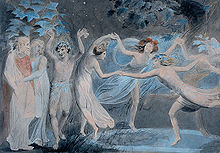
Oberon, Titania, Puck, in Midsummer Night’s Dream
In this article, we observe that as a side effect of the homo/hetero divide, Shakespeare has been monosexualized one way or the other.  McLelland’s discussion levels the playfield to where any actual bisexual interpretations of a specific work or set of works by the Bard will register as as legitimate as one based in any other sexual orientation.  When it comes to a cultural icon around which so much in the ways of maintaining the status quo is invested, that is to say a lot!  Last but not least, Hartmut Friedrichs’ “Politics Strategy: Bisexual or Queer” envisions transformative goals for bisexuality that affect a whole range of areas in human life, and discusses strategies that may be effective in timeframes ranging from the present to a whole century from now.

To be be continued: 8 of 8 – Conclusion.  Watch out for this exciting section in a few days!

Copyright and Prepublication Notice:
© Serena Anderlini-D’Onofrio, transferred to Taylor & Francis for upcoming publication in BiReCon, a selected proceedings issue of the Journal of Bisexuality.  Prepublished here courtesy of T & F.  Stay tuned for volume and buy it online!
Read the Journal of Bisexuality online, the only peer-reviewed journal dedicated to the study of all aspects on bisexuality.   Check out our latest: a provocative special-topics issue on Bisexuality and Queer Theory!
http://polyplanet.blogspot.com
5 of 8 – BiTopia: Bisexuality Through the Lifespan. Read Introduction to BiReCon 2010’s Proceedings Volume

Bi ReConNaissance: Introduction to BiReCon
Cluster 3. Bisexuality Through the Lifespan
Serena Anderlini-D’Onofrio
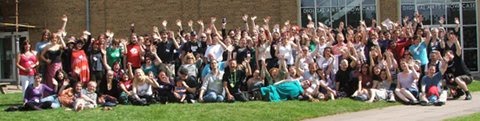
While the effects of biphobia rage in many quarters, the discourse of bisexuality has expanded in others, including the meaningfulness of bisexuality through the human lifespan.  This is the focus of the third cluster. 
Jones’s Study: Bis Imaging Future
“Imagining Bisexual Futures” organizes data from past BiCon surveys and a workshop on aging at BiReCon 2010 called “When I Get Old” to explore how bisexual people imagine and wish to organize our late life.  Rebecca Jones, a Lecturer at the Open University in Buckinghamshire, proposes an ethnomethodological perspective to examine normativity as defined within a given subculture in its interfaces with scripts and expectations that evolve in mainstream culture.  In her view, in these subcultures, we observe a forging and re-forging of normativites that are in flux.  Her research implies the trust that imagining non-normative futures in a workshop can help to actualize them.  Being on the verge of designing the next chapter of my own life, I found this workshop very inspiring.  How can bis design chapters in our lives that reflect the way we want to be?  Can ‘normativity’ be redesigned to accommodate bisexual people’s dream late-life?  Or will old bis get to be ‘normalized’ and pushed back into the closet by assisted living and the medicalization of late-life?  Could old-age be the time when we bis get to finally fulfill our inclusive amorous fantasies?  Jones’ research maps these possibilities, since the imagination is where it all begins! 
Jones’s Study” Bis Imagining Future
In “There Has Been No Phase in My Life When I Wasn’t Somehow Bisexual,” Finnish anthropologist Jenny Kangasvuo provides some concrete examples of how the meaning of bisexuality can evolve in one’s life.  In 1999, Kangasvuo’s interviews with 40 bisexual-identified Finnish people opened her career.  Now she revisits a number of her subjects with follow-up questions designed to understand “what kind of meaning does the concept of bisexuality have in their lives” (7).  Informants evolved along different paths: Some had children, some formed a family with a same-gender partner, some with an other-gender partner, some married and divorced under the new Finnish laws for marriage equality.  Bisexuality remained significant in organizing meaning in their lives.

Jones’ s Study: Bis Imagining Future

To be be continued: 6 of 8 – Cluster 4: Bisexuality at Work.  Includes comments about contributions by Heidi Bruins Green, Helena See, and Carola Towle.  Watch out for this exciting section in a few days!

Copyright and Prepublication Notice:
© Serena Anderlini-D’Onofrio, transferred to Taylor & Francis for upcoming publication in BiReCon, a selected proceedings issue of the Journal of Bisexuality.  Prepublished here courtesy of T & F.  Stay tuned for volume and buy it online!
Read the Journal of Bisexuality online, the only peer-reviewed journal dedicated to the study of all aspects on bisexuality.   Check out our latest: a provocative special-topics issue on Bisexuality and Queer Theory!
http://polyplanet.blogspot.com
4 of 8 – BiTopia: Contexts for Biphobia and Bi-Negativity. Read Introduction to BiReCon 2010’s Proceedings Volume

Bi ReConNaissance: Introduction to BiReCon
Serena Anderlini-D’Onofrio
Cluster 2.  Contexts for Biphobia and Bi-Negativity

Freedom of sexual expression is often considered a fundamental human right.  In this context , we observe that when research projects are designed with the intent to respect this right, results for bisexuality are encouraging.  Even so, when we open up wider horizons, when we delve more deeply into human relatedness and its dynamics, we find that biphobia and bi-negativity are far from disappearing.  This is the focus of the second cluster.  Where does the fear of bisexuality make its appearance?  What are the contexts, dynamics, situations that trigger biphobia?  What deeper levels of disunity, denial, mistrust, does this fear manifest?  How are organizations, communities, families, relationships traversed by it?  How do biphobia and bi-negativity get symbolized?  What political, cultural, economic forces power its perpetuation and reproduction?  What are the costs to humanity in terms of personal and social life?  These and many related questions are addressed in the two articles in this section:  “Deconstructing Biphobia,” by Miguel Obradors-Campos, and “Shady Characters,” by Christian Klesse. 

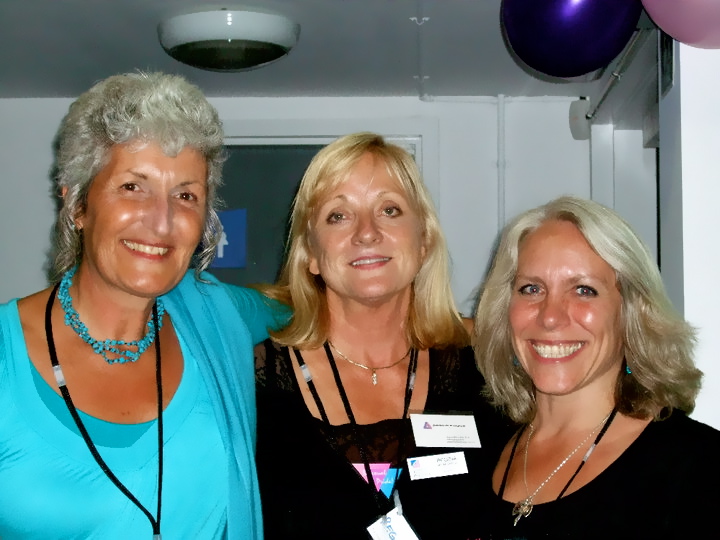
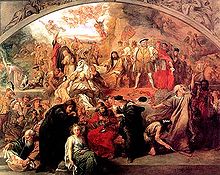
People at BiCon

In “Deconstructing Biphobia,” Miguel Obradors-Campos presents a non-essentialist theory of biphobia as a form of oppression that manifests within and without LGBT communities and is a direct result of the overarching binary that organizes knowledge about love in western cultures.  Obradors’ perspective is steeped in epistemology, ontology, and other significant aspects of the Western philosophical tradition, from the classics to Kant and beyond.  He brings his background in the Romance languages to bear on the complexity of the topic, showing how biphobia is a state of mind.  It is an honor to bring such complexity of Latinate lexicon and sentence structure into the multivoiced discourse of this volume.  Klesse shifts to the even more personal and unstable terrain of amorous relationships.  His reference point is heteronormativity, or the ‘normalization’ of heterosexuality that typifies essentialist discourses.  Can bisexuals really organize our amorous lives around a divide that denies us?  Both authors provide evidence of how prejudice, fear, ignorance, and confusion about bisexuality affect the lives of openly bisexual people very deeply, and keep bisexual cultures and communities from expanding as naturally and organically as they should in a healthy society.

To be be continued: 5 of 8 – Cluster 3: Bisexuality Through the Lifespan.   Includes comments about contributions by Rebecca Jones and Jenny Kangasvuo.  Watch out for this exciting section in a few days!

Copyright and Prepublication Notice:
© Serena Anderlini-D’Onofrio, transferred to Taylor & Francis for upcoming publication in BiReCon, a selected proceedings issue of the Journal of Bisexuality.  Prepublished here courtesy of T & F.  Stay tuned for volume and buy it online!
Read the Journal of Bisexuality online, the only peer-reviewed journal dedicated to the study of all aspects on bisexuality.   Check out our latest: a provocative special-topics issue on Bisexuality and Queer Theory!
http://polyplanet.blogspot.com

3 of 8 – BiTopia: Is Bisexuality Entering the Third Millenium? Read Introduction to BiReCon 2010’s Proceedings Volume

Bi ReConNaissance:  An Introduction to BiTopia

Serena Anderlini-D’Onofrio

Cluster 1. Bi Re(Con)Naissance: When Bisexuality Enters the Third Millennium
The first of five clusters in which this volume’s contributions have been organized includes introductory articles that also reflect and elaborate on the contents of plenary sessions.  “BiReCon: An International Academic Conference on Bisexuality” is a multivoiced narrative based on observation and a micro-historicist perspective that nimbly documents and captures the energy and movement of the event.  The team of authors, including Meg Barker, Christina Richards, Rebecca Jones, and Surya Monro, were also key agents for the convergence of three Bi events that made BiReCon momentous.  They warmly welcomed BiReCon research into the BiCon, ICB, BiTopian space.  Their contribution clearly outlines the background and social actors that made the convergence possible, and briefly highlights presentations and their significance.  The appended copy of the Conference Program orients readers as to the variety of topics and contributions, with a complete list that includes presentations not available in article form.
Subsequent contributions in this section memorialize the three keynotes of the day.  In “Why We Need to ‘Get Bi’,” long-time bi educator and activist Robyn Ochs explains why the binary that organizes current thinking about sexuality needs to be overcome, along with the oppositional logic that affects human thinking in all areas of life.  Ochs’ pragmatic voice powerfully outlines strategies for global action. 
In “Bisexuality, Gaia, Eros: Portals to the Arts of Loving” yours truly takes this line of reasoning one step further to introduce the global ecology of bisexuality.  In a cosmos where matter and energy, mind and body, nature and humanity are aligned, bisexuality functions as a portal to a world beyond the hetero/homo divide, where the symbiotic energy of love is revered, the practice of love considered an art.  In this BiTopian world, Eros, the energy of love is recognized as the force that makes Gaia, the third planet Earth, alive. 

In a similar vein, the last contribution in this section comes from a perspective that honors erotophilia, or the love of love, rather than erotophobia, or the fear of love.  Its applied research is auspicated by AIB, the American Institute of Bisexuality.  Eric Anderson and his collaborators present significant in-progress findings on men and bisexuality, with a focus on secular cultures in today’s major metropolitan areas of the West.  The team includes Matthew Ripley, Adrian Adams, and Robin Pitts.  In “The Decreasing Significance of Stigma in the Lives of Bisexual Men” the authors document a cultural shift that empowers young men of our time to be more fluid about their sexuality and more relaxed about connecting physically and emotionally with one another, when compared to men who came of age on or before the AIDS era. 

The attention paid to gay cultures in the context of this epidemic has made gayness more acceptable to people who love love and respect erotophilia, or the human drive to make that love expressed.

To be be continued: 4 of 8 – Cluster 2: Contexts for Biphobia and Bi-Negativity.  Includes comments on contributions by Christian Klesse and Miguel Obradors-Campos.  Watch out for this exciting section in a few days!

Copyright and Prepublication Notice:

© Serena Anderlini-D’Onofrio, transferred to Taylor & Francis for upcoming publication in BiReCon, a selected proceedings issue of the Journal of Bisexuality.  Prepublished here courtesy of T & F.  Stay tuned for volume and buy it online!
Read the Journal of Bisexuality online, the only peer-reviewed journal dedicated to the study of all aspects on bisexuality.   Check out our latest: a provocative special-topics issue on Bisexuality and Queer Theory!
http://polyplanet.blogspot.com
2 of 8 – BiTopia: Bisexuality’s Meanings and Contexts. Read Intro to BiReCon, Cont’d

Bi ReConNaissance:
An Introduction to BiTopia, Selected Proceedings from BiReCon
Serena Anderlini-D’Onofrio

Bisexuality: Meanings and Contexts
As public discourse manifests around bisexuality, the meanings of bisexuality gradually weave together into a multivoiced discourse where they become symbiotic with one another, as in a permaculture garden.  At the same time, the contexts, disciplinary and otherwise, where bisexuality manifests, become more diverse and widespread. 
In assessing the work of this volume, my wish is to interpret BiReCon as the portal to a BiTopia, a brave new world where loving love is fine and binaries do not apply.  When the meanings of bisexuality are memorialized, one finds how they defeat oppositional logic on many counts.  Is bisexuality about sex or love?  Is it about the potential or the act?  Does it divide or unite?  Is it about the body or the psyche?  When we introduce the trope of bisexuality in cultural discourse, we find that we cannot ask these simple questions innocently any more.  The questions bisexuality brings up simply correspond to the binary logic that binds modern thought to an old cultural paradigm.  It takes the work of many teams of interdisciplinary scholars and researchers to generate the energetic field of interconnected minds capable of debunking that binary.  A significant amount of that work is being accomplished in this volume and the convergence of events it refers to. 
@ BiReCon w/ Regina Reinhard & Robyn Ochs
Bisexuality is a modern word for expressions of the erotic among humans, expressions that are as old as human life in general.  The word is modern in the sense that it is based on the notion of sexuality.  This notion organizes what was known in antiquity as the arts of loving under a scientific aegis.  However, the practice of love among humans, and other species with a digametal, male/female system of reproduction, precedes the modern era, and transcends gender boundaries.  Love itself starts with unicellular life, where gender does not apply.[1]  As long as there is no evidence of the superiority of monosexuality, there is no reason to accept cultural constructions of “nature” that marginalize bisexuality.  In other words, bisexuality is “natural,” no matter what semiotic perspective applies.
This semiotic function of bisexuality as a hinge between eras and cultural paradigms, is what produces variance in the meaning of the word across space and time, and what grants its complexity a significant function.  For example, when referred to antiquity retroactively, the word indicates the fluctuations of erotic desire that were considered integral parts of a person’s development into adulthood.[2]  In classical Athens, one learned about the arts of love from older mentors of one’s gender, one practiced with other-gender partners.  When referred to early modernity, bisexuality indicated the performative aspects of gender that were typical of that era.  On the Elizabethan stage, for example, young men played women who played men, in a triple entendre that allowed to eschew the constraints of Christianity that labeled same-sex love unnatural.  This allowed Shakespearean actors, all men, to “play” with other men, on the stage, and–sometimes at least–behind the wings.[3]  In modernity, the b-word became associated with androgyny, a 19th century style of gender performance that enhanced the intertwined character of feminine and masculine traits in humanity.  Orlando, in Virginia Woolf’s novel by the same title, is a woman who is a man who is a woman–a transgender person as androgynous and bi as the author ever was.[4] 
It’s only in the 20th century that the current emphasis on desire became emphasized.[5]  Yet, when we see bisexuality as a portal to BiTopia–the brave new world where the energy of love circulates beyond gender binaries–we understand that the force of bisexuality in discourse is the complexity of all these meanings combined.  When we think of BiTopia as the energy of a global paradigm shift from binary to inclusive, from linear to complex, from erotophobic to erotophilic, we see that bisexuality functions as a portal, not a divide.  When we imagine the world beyond this portal, we appreciate this complexity as an asset.  Love, beyond that portal, is not a need or an instinct, but an art.  In this context, bisexuality is the subtext of a bouquet of imaginative styles of erotic expression that virtually live beyond the divide, including bi, trans, poly, swing, pan, omni, gay, lesbian, goth, BDSM, metro, eco, and many others. 

The venue that hosted the three combined events, UEL Dockland Campus, is a public university that serves many of the new populations of London’s extended metropolitan area.  The venue itself is significant in this context.  In England and the world today, the forces of democracy are defending public education as a foundation for the practice of democracy.  Yet basic human rights are continuously being violated precisely because not enough reliable knowledge is publicly accessible.  Sexual freedom is one of these basic rights.  In a world still dominated by the homo/hetero divide, bisexuality is an expression of sexual freedom whose significance is enhanced by the divide.  In hosting three Bi events combined, UEL accomplished its mission of auspicating democracy via public education.  The practice of bisexuality is a way that sexual freedom becomes expressed.  The study of bisexuality is a way to understand what this practice is in its multiple aspects.  When we memorialize BiReCon in this volume, we produce reliable knowledge about bisexuality and practice democracy in the form of making knowledge that is both academic and transformative accessible to the public.

The combined events were a unique opportunity to get a sense of what bisexuality is today, of its transformative potential as the third millennium comes into full swing.  Nobody knows what the future brings, and yet, we do know that the future of bisexuality is in the hands of those with the ability to think together about a third millennium where oppositional reason gives way to symbiotic reason. Symbiotic reason integrates both elements in a binary and honors the infinite diversity of the in-between, the infinite complexity of life that loves itself and sustains itself.[6]  This future will be ushered by those with the ability to respect the experience of bisexuality as a source of knowledge.  They/we have affirmed this identity and transformed it into an epistemic portal to a future without binaries.
To be continued: 3 of 8 – Cluster 1: When Bisexuality Enters the Third Millennium.  Watch out for this exciting section in a few days!  Includes comments on keynotes by Robyn Ochs, Serena Anderlini, Eric Anderson, and on event’s genesis by Meg Barker and other organizers. 

Copyright and Prepublication Notice:
© Serena Anderlini-D’Onofrio, transferred to Taylor & Francis for upcoming publication in BiReCon, a selected proceedings issue of the Journal of Bisexuality.  Prepublished here courtesy of T & F.  Stay tuned for volume and buy it online!
Read the Journal of Bisexuality online, the only peer-reviewed journal dedicated to the study of all aspects on bisexuality.   Check out our latest: a provocative special-topics issue on Bisexuality and Queer Theory!


[1] My sources are Margulis and Sagan (1991 and 1997), passim.
[2] My source is Cantarella (1992), passim.
[3] Significant sources include Chedgzoy (1997), and Garber (2000), passim.
[4] For bisexual paths to an interpretation of Woolf’s fiction, I refer to Marshall (2010).
[5] For more on the history of the word bisexuality, I refer to Storr (1999).
[6] I discuss this at length in Gaia and the New Politics of Love (2009) often also seen as a manifesto for ecosexuality. 
http://polyplanet.blogspot.com